


Why 1-on-1 Functional Training is the Best Approach for Rehab & Strength

Functional training focuses on building strength, stability, and mobility through movements that mirror real-life activities. Instead of isolating muscles with machines or rigid routines, it trains your body to work as a coordinated system—improving the way you move, not just how much you lift.
At The Manual Shop in Astoria, functional training is the foundation of everything we do. Whether you’re coming in for injury recovery or looking to improve performance, our approach targets movement patterns like squatting, hinging, pushing, pulling, and rotating. These are the same motions you use when climbing stairs, picking up groceries, or sprinting down a field.
Why is this important? Because movement is the gateway to strength—and strength without function doesn’t last. By focusing on how your body moves as a whole, functional training delivers long-term improvements in:
Core strength and postural control
Joint stability and range of motion
Balance and coordination
Pain-free performance in sport and daily life
It’s not about working harder—it’s about working smarter. And for that, nothing beats a training model built around functional movement.
The Problem with One-Size-Fits-All Fitness and Rehab
Walk into most gyms or group rehab settings, and you’ll see the same thing: a handful of generalized exercises, broad progressions, and little to no hands-on feedback. While that might be fine for the average gym-goer, it’s a risky and often ineffective approach for anyone working through pain, recovering from injury, or aiming for real performance improvements.
Here’s the issue: movement quality is personal. What works for one person can overload another. Without a trained eye and individualized coaching, it’s easy to fall into poor habits—compensating for weakness, reinforcing asymmetries, or ignoring mobility deficits that eventually lead to injury.
Some of the most common downsides of generic programs include:
Lack of progression that matches your body’s specific needs
Missed warning signs that could flag underlying dysfunctions
Minimal feedback on technique, leading to poor movement patterns
No accountability or clarity on why certain exercises are being used
At The Manual Shop, we believe that precision beats quantity. You don’t need more reps—you need the right ones, done with the right intent, and coached by someone who knows how to get you there safely.
That’s where 1-on-1 functional training comes in.
The Power of 1-on-1 Coaching at The Manual Shop
One-on-one training isn’t just a luxury—it’s the fastest, safest, and most effective way to rebuild strength, improve movement, and keep progressing. At The Manual Shop in Astoria, our 1-on-1 functional training model is built around you: your body, your goals, and your timeline.
Here’s what sets it apart:
Individualized Assessment
We start every client with a thorough movement and strength evaluation. This helps us understand your baseline, identify limitations or pain triggers, and create a roadmap that meets you exactly where you are.
Hands-On Cueing and Real-Time Feedback
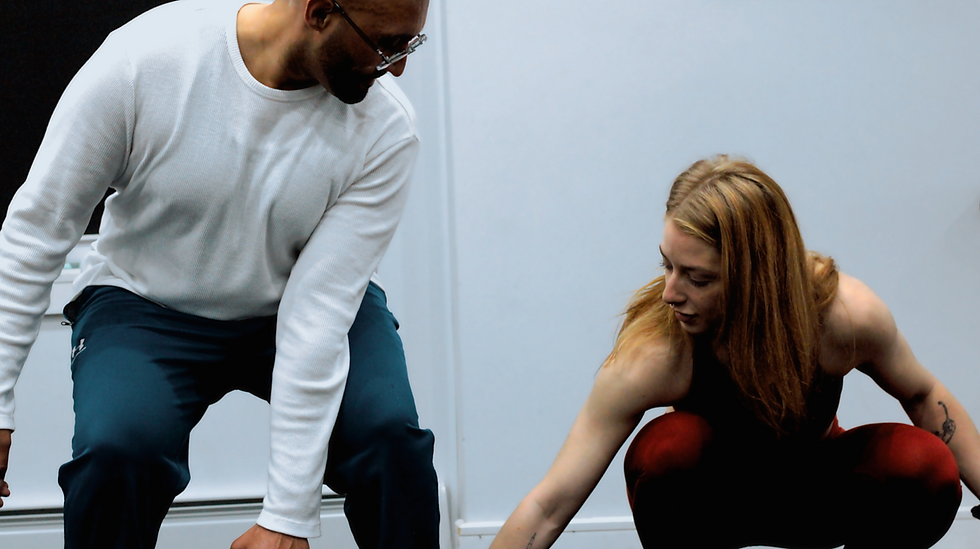
Your coach is with you every step of the way—correcting form, adjusting tempo, and modifying exercises in real time to match your abilities. This level of attention prevents bad habits and accelerates results.
Progressive Programming
We track every session, tweak your plan based on how your body responds, and layer on intensity or complexity as needed. Whether you’re post-rehab or pushing performance, your program evolves with you.
Built-In Accountability
Having a dedicated coach keeps you consistent. You’re not just showing up for a workout—you’re showing up for a purpose, with someone who knows your story and how to help you move forward.
This kind of coaching relationship builds confidence, trust, and long-term change—because your success isn’t left to chance.
From Pain to Performance: Functional Training That Adapts With You
One of the biggest misconceptions about functional training is that it’s only for athletes or already-fit individuals. At The Manual Shop, we see it differently. Functional training is for anyone who wants to move better—whether you’re recovering from surgery, managing chronic pain, or chasing a performance goal.
The key is adaptability. Our 1-on-1 training doesn’t follow a fixed template—it evolves as your body does. You might start with rehab-focused sessions emphasizing mobility, stability, and neuromuscular control. But as your pain decreases and your strength returns, your sessions progress into more dynamic movement patterns, strength building, and conditioning.
This continuum—from rehab to performance—makes functional training so effective. You never "graduate" from therapy only to start over at the gym. Instead, your progress is seamless, with every session building on the one before it.
Here’s what that progression can look like:
Phase 1: Reset Restore mobility, reduce pain, and reintroduce foundational movements.
Phase 2: Reinforce Build strength, re-train stability, and correct compensations with targeted exercises.
Phase 3: Perform Increase load, speed, and complexity to match sport or life demands.
No matter where you start, functional training meets you there—and keeps you moving forward.
Book Your Functional Training Assessment in Astoria
If you’re ready to move better, get stronger, and finally train in a way that supports your long-term health and performance, The Manual Shop is here for you. Our 1-on-1 functional training sessions are built to meet you where you are—whether you’re in pain, bouncing back from injury, or ready to take your strength to the next level.
We don’t do guesswork. We assess, program, coach, and progress with intention—so every rep has a purpose and every session moves you forward.
Our space in Astoria is built for personal attention, high-quality coaching, and results that last. If you've been looking for a more thoughtful, effective approach to rehab and strength, this is it.
Book your assessment today and experience the difference of truly individualized training.


Comments